

Write to us


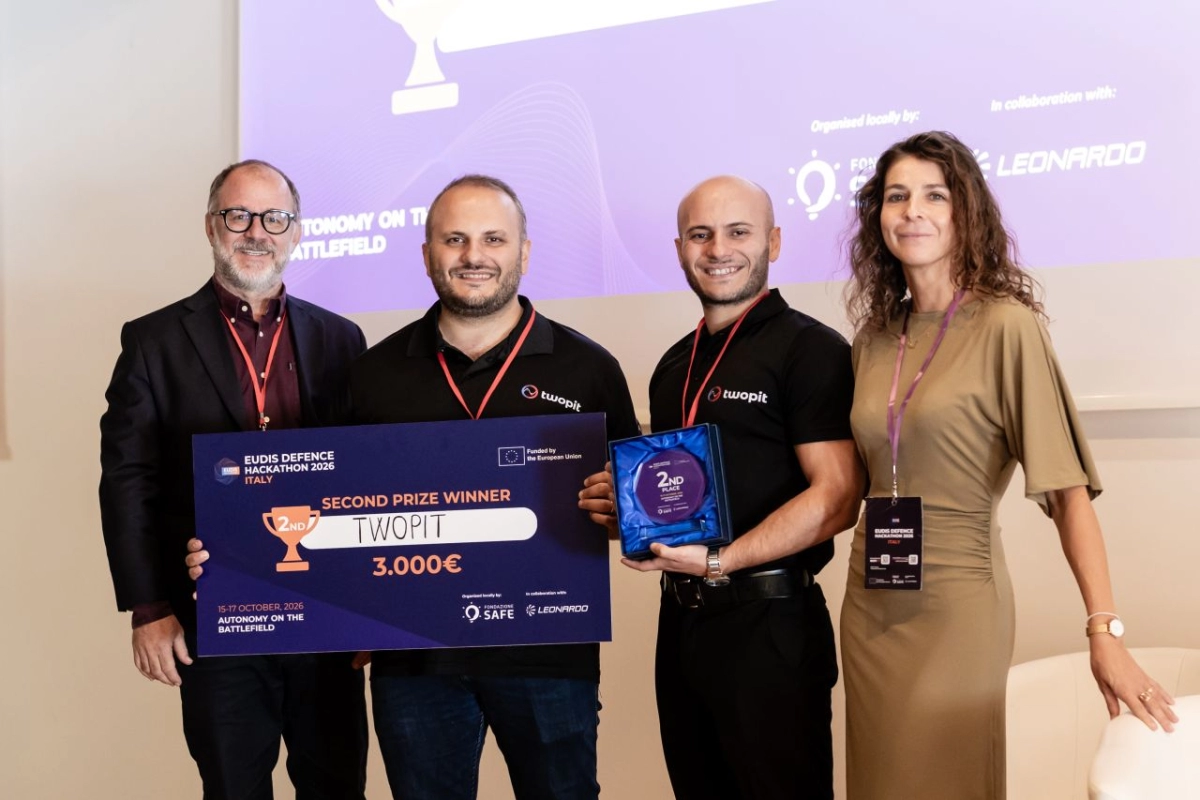
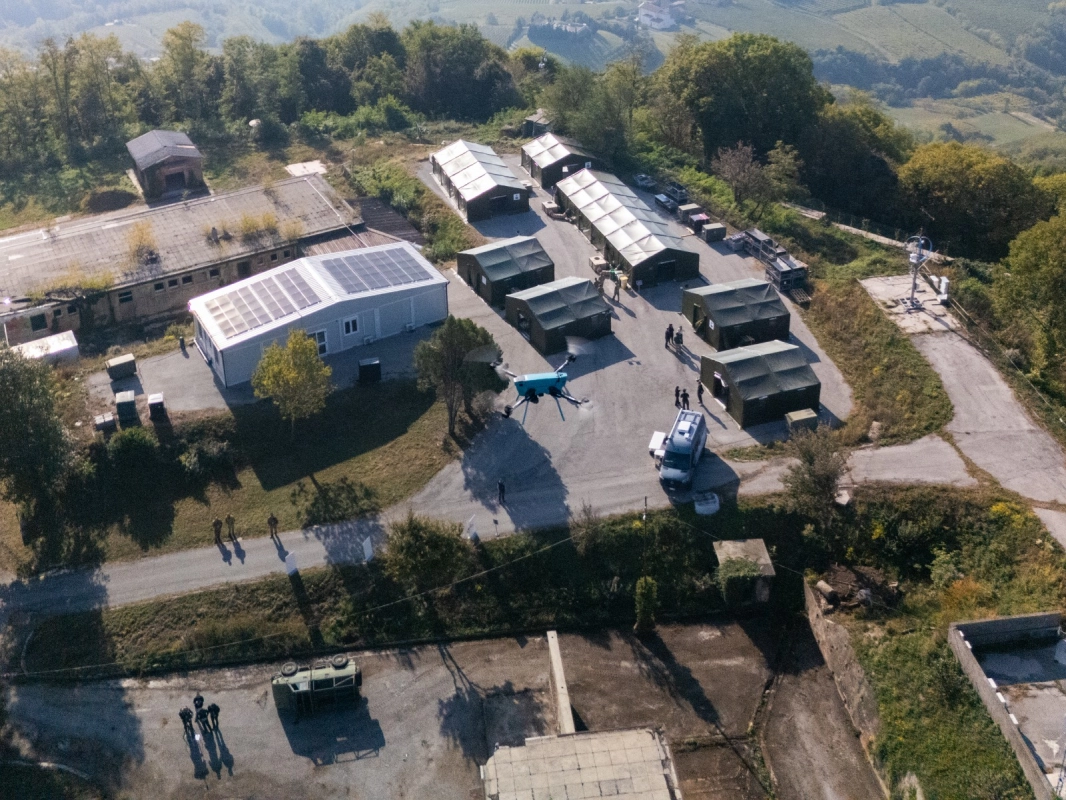
Second place at the EUDIS Defence Hackathon 2026 – Italy. In Soave, we presented our vision for a communication infrastructure designed to connect autonomous systems, devices, and operators, even in the most challenging environments.
It All Starts With One Question
What happens when a technological system can operate autonomously but can no longer communicate?
This was the question that guided our participation in the EUDIS Defence Hackathon 2026, held from October 15 to 17 in Soave, near Verona, Italy.
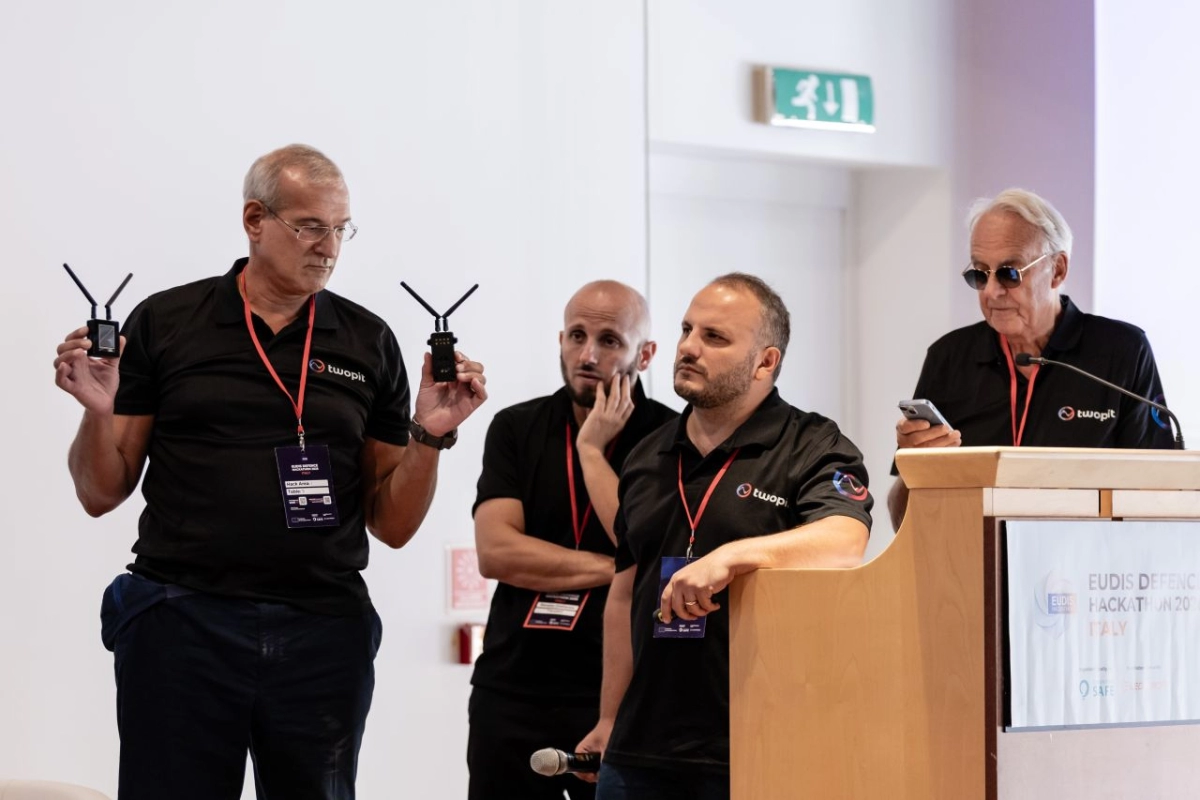
Over three days, we had the opportunity to demonstrate how our technology could contribute to addressing some of today's most relevant challenges in defence technology and autonomous robotics.
The result was second place in the Italian competition.
But what we take away from this experience goes far beyond the recognition itself: the opportunity to demonstrate how an invention originating from telecommunications research can contribute to the development of a new generation of connected systems.
We Didn't Want to Build Just Another Drone
During the hackathon, we approached the challenge from a different perspective.
Today, increasingly sophisticated drones, intelligent sensors, robotic platforms, and processing systems are capable of making decisions in real time.
Yet their ability to collaborate still depends on the availability of reliable communication links.
Our proposal is not to replace these platforms.
Our goal is to develop the communication component that allows them to exchange information, regardless of the system in which it is integrated.
A TWOPIT communication node can be designed to integrate with different devices and architectures, enabling the development of distributed networks and interoperable solutions.
This is the principle driving our work.
Our Approach to the Challenges of Autonomy
At EUDIS 2026, we addressed three technological areas: GNSS-Denied Navigation, Swarm Coordination, and Counter-UAS.
Three different challenges, united by the need to collect, transmit, and share information.
In GNSS-denied environments, autonomous systems can rely on inertial sensors and positioning algorithms to estimate their location. Communication technologies can help share this information between platforms, complementing rather than replacing navigation systems.
In swarm coordination, information exchange becomes essential for synchronizing activities and sharing the operational status of individual nodes.
In Counter-UAS applications, connectivity can support the distribution of information collected by detection and monitoring systems.
We therefore presented TWOPIT as a potential communication component that could support multiple technological architectures, rather than a solution limited to one specific operational scenario.
One Technology, Multiple Integration Possibilities
Our research focuses on a proprietary method for encoding and transmitting information, protected by a granted Italian patent and an internationally published patent application.
The objective is to exploit specific signal characteristics to represent and transfer digital information through different physical transmission channels.
This approach forms the technological foundation of TWOPIT prototypes, from acoustic communication systems to devices designed for challenging environments.
We have already conducted experimental activities in underwater communication and continue to develop increasingly compact electronic hardware capable of integrating our technology.
We do not envision a single universal device, but rather a family of products built around the same technological foundation.
Modems, electronic boards, communication nodes, and control interfaces could address different operational needs while sharing a common technological architecture.
From Experimental Research to Industrial Systems
TWOPIT's journey began long before our participation in EUDIS.
Over the years, we have developed hardware and software prototypes, conducted transmission experiments, and investigated the application of our technology in complex operational environments.
An important contribution to this journey came from experimental activities carried out with the valuable support of specialized units of the Catania Fire Department, to whom we extend our sincere appreciation.
The results achieved provide a foundation for our next phase: designing proprietary hardware and developing products that can be integrated into professional systems.
Our development roadmap includes embedded electronics, communication modems, robotic platforms, acoustic systems, and software solutions for information management.
We are also looking toward future industrialization through electronic design, advanced prototyping, and dedicated manufacturing processes.
The Strength of a Multidisciplinary Team
TWOPIT brings together expertise spanning computer science, naval engineering, oceanographic research, electronic design, operational technologies, and industrial development.
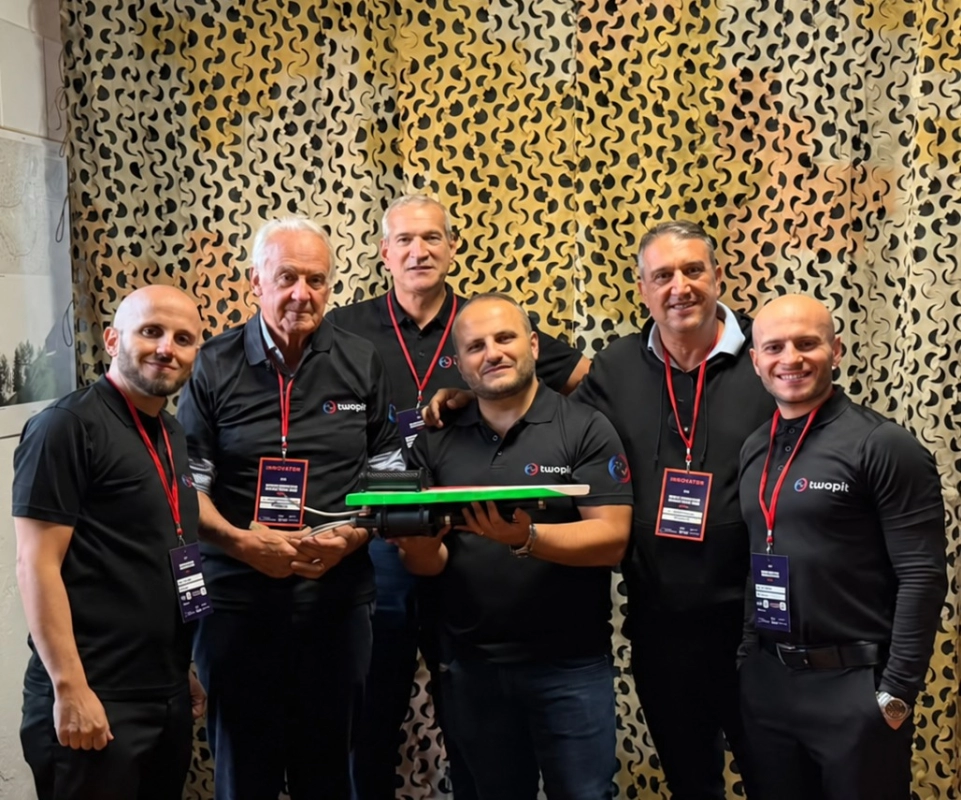
Our team includes Emanuele Costanzo, Renato Costanzo, Gabriele Costanzo, Lavinio Gualdesi, Marzio Tempra, and Ciro Polese.
The combination of different professional backgrounds allows us to approach technological challenges from complementary perspectives.
For us, innovation means connecting research, engineering capabilities, and real-world operational requirements, progressively transforming patented technology into practical solutions.
Second Place Is a Milestone, Not the Destination
Achieving second place at the EUDIS Defence Hackathon 2026 – Italy represents an important milestone for our team.
Following our selection as finalists at the City Resilience Challenge in Tallinn, this experience further strengthens our engagement with the European innovation ecosystem.
Our direction remains clear: continue developing our technology, advancing our prototypes, and building opportunities for industrial and commercial collaboration.
We aim to engage with hardware manufacturers, robotics companies, maritime operators, technology enterprises, and investors interested in the future of communications.
Our ambition is not simply to improve how devices communicate. It is to make connectivity a capability that can be integrated into different systems, specifically designed to operate where communication is most challenging.
This is the vision we brought to EUDIS.
And this is the direction we will continue to pursue.
TWOPIT – Connect Anyware.
© Twopit 2026